
Materials, Condensed Matter and Complex Systems
About Materials, Condensed Matter and Complex Systems
The research focus “Materials, Condensed Matter and Complex Systems” combines a broad spectrum of experimental, theoretical and computational research. The focus is on novel functional materials, nano- and microstructured systems, low-dimensional materials, soft and active matter, polymers and biophysical problems.
A central concern is the development of innovative experimental and computational methods for basic research and future-oriented technologies. These include state-of-the-art spectroscopy and microscopy methods that enable investigations at the atomic level with the highest precision.
Through the pioneering integration of methods for solving the Schrödinger equation, methods of statistical physics as well as machine learning and artificial intelligence approaches, we set international standards in terms of the efficiency and accuracy of material simulations and make a significant contribution to the development of new materials and technologies.

Professors Materials, Condensed Matter and Complex Systems
-
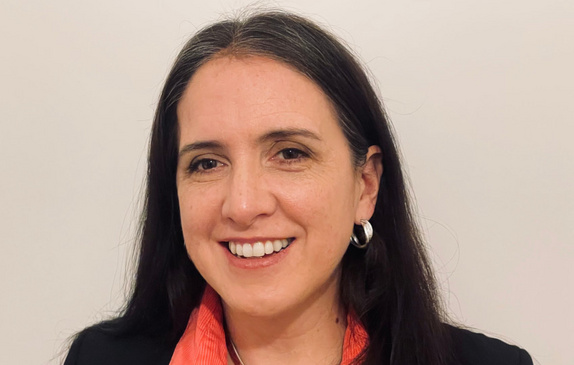
Paola Ayala
Ayala's group focuses on tailoring the functionality of nanostructured materials for applications like gas sensing and biosensing. Their research centers on understanding the physical grounds behind the distinctive electronic and optical signatures of structures such as functionalized single-walled carbon nanotubes and TMDC nanostructures.
 Paola Ayala
-
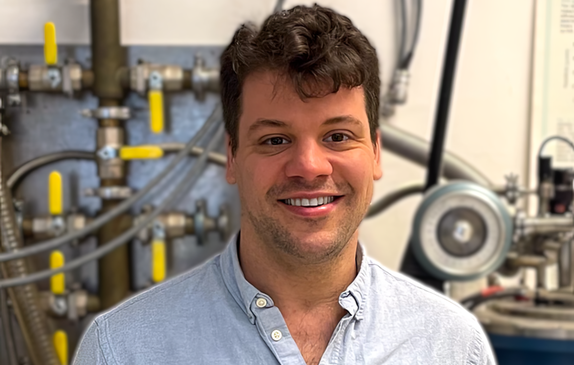
Luca Felix Banszerus
We are a young experimental research group with a focus on quantum transport and superconductivity in nanoelectronic devices, particularly those based on two-dimensional (2D) materials such as graphene, transition metal dichalcogenides, and more complex van-der-Waals heterostructures.
 AG NanoMag
-
Roberto Cerbino
We develop advanced optical and rheological methods to uncover the physics of soft and living matter, from colloids and gels to cells and tissues, bridging microscopy, scattering, mechanics and non-equilibrium dynamics on Earth and in space.
 Roberto Cerbino
-
Andrii Chumak
Our group conducts leading research in magnetism, exploring spin-wave physics, quantum magnonics at millikelvin temperatures, and dynamics of magnetic systems at the nanoscale. Leveraging AI-driven inverse-design approaches, we develop novel energy-efficient magnon-based computing and RF technologies.
 Faculty of Physics, U of Vienna
-
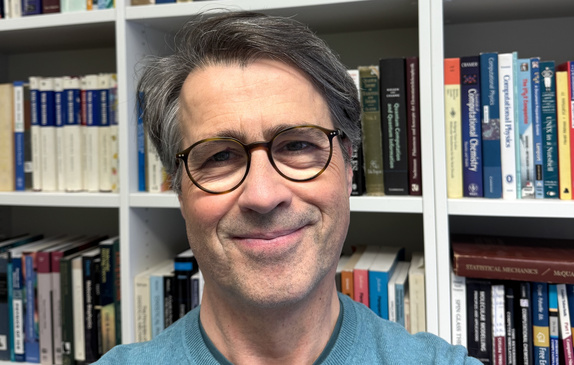
Christoph Dellago
Christoph Dellago develops computer simulation algorithms to investigate dynamical processes in condensed matter systems, ranging from nucleation to self-assembly and biomolecular reorganizations. Recent work focuses on applying machine learning techniques to discover molecular mechanisms.
 C. Dellago
-
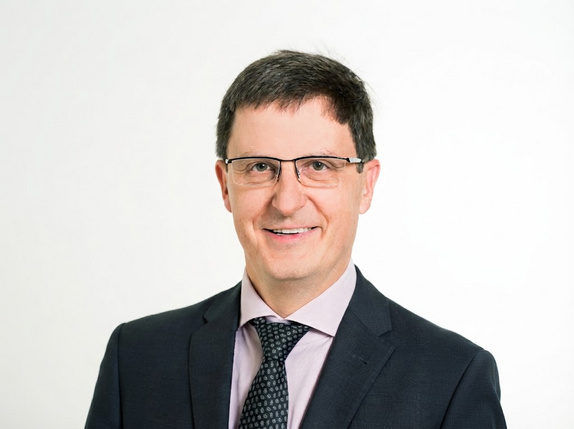
Martin Fally
We use optical holography in specialized nonlinear materials to fabricate diffractive optical elements for light and, especially, very cold neutrons. Three gratings are aligned to form a neutron interferometer. Experiments are conducted at neutron facilities in France.
 Barbara Mair
-
Cesare Franchini
My research focuses on the development and application of first-principles methods, quantum many-body techniques, and artificial intelligence to understand and predict quantum materials, with emphasis on electronic correlations, magnetism, electron-phonon interactions, and polarons.
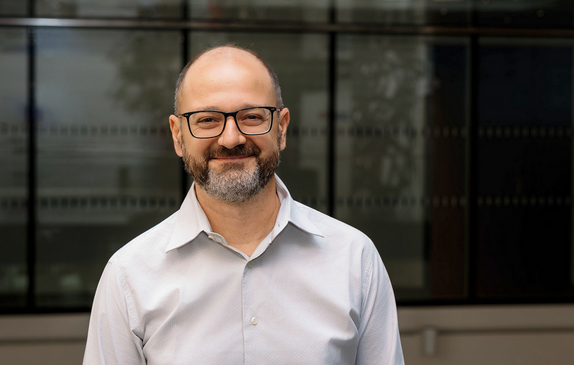 Sabina Maurer
-
Kerstin Hummer
Using first‑principles methods and high performance computing, I study technologically relevant properties of semiconducting solids, surfaces, and low‑dimensional materials with emphasis on examining how structure, defects, and strain affect their stability, electronic and optical behavior.
 Faculty of Physics, U of Vienna
-
Sofia Kantorovich
Under construction
 Sofia Kantorovich
-
Jani Kotakoski
Jani's research focus is on atomic-scale manipulation of materials, combining materials physics, transmission electron microscopy, and computational physics. His current goal is to create atomically tailored structures for the second quantum revolution, and green energy production and storage.
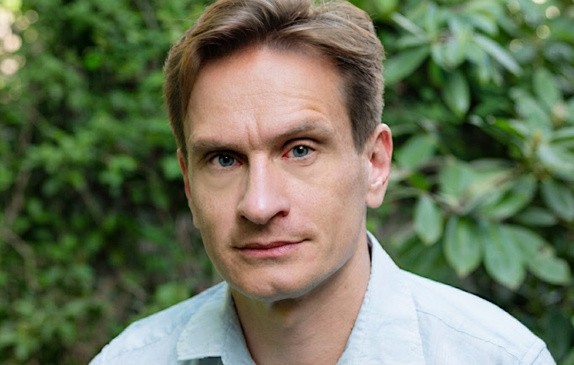 S. Kotakoski
-
Georg Kresse
Georg Kresse's research focuses on solving the many-body Schrödinger equation for real materials. Using VASP, he integrates quantum Monte Carlo methods with on-the-fly machine learning to bring unprecedented precision to condensed matter systems and bridge the gap between DFT and exact theory.
 Faculty of Physics, U of Vienna
-
Christos Likos
Soft matter theory and simulation; in- and out-of-equilibrium properties of complex fluids; structure, dynamics, and rheology of colloidal suspensions and polymer solutions; glasses; active and biological matter; biomacromolecules; topology in soft matter; phase transitions; didactics of physics.
 C. Likos
-
Reinhard Maurer
Renewable technologies such as batteries and fuel cells require ultrafast dynamics of atoms and electrons across materials interfaces for their function. We develop quantum and classical simulation and machine learning methods to understand and design new materials with optimal properties.
 Faculty of Physics, U of Vienna
-
Thomas Pichler
My research covers materials science, solid-state physics/spectroscopy, mesoscopic physics, strongly correlated systems, low-D quantum solids (e.g. graphene, TMDC, nanotubes, fullerenes, confined carbyne). We pioneer their materials design and investigation of fundamental electronic transport and optical properties by developing advanced optical & electron spectroscopy.
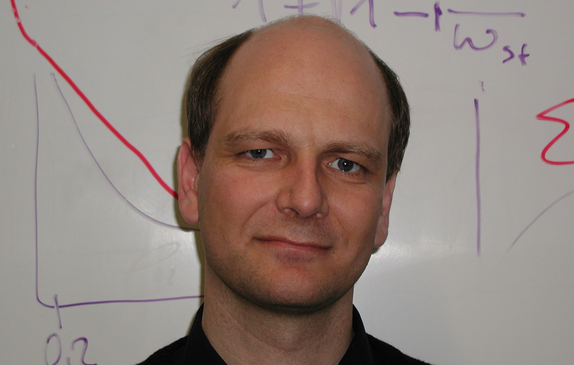 Thomas Pichler
-
Christian Rentenberger
The research focus is on the characterisation of nanostructured, nanoscaled and bulk materials using state-of-the-art techniques including transmission electron microscopy to study the structure-property relationships of stable and metastable materials, with some emphasis on energy-related materials.
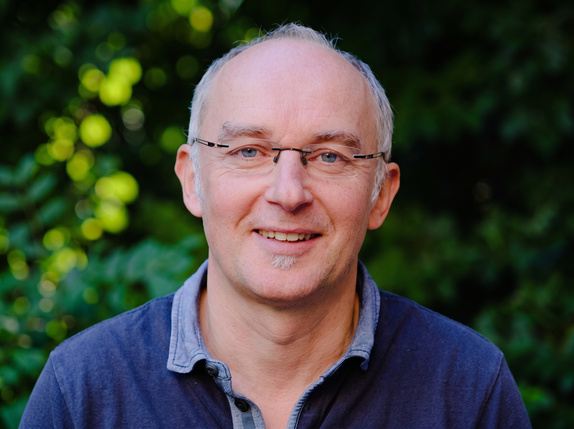 Kotakoski
-
Erhard Schafler
Erhard Schafler is working on synthesis of nanostructured/nanocrystalline bulk materials by methods of severe plastic deformation (SPD). His work focuses on the mechanical and functional properties of the produced microstructures and their characterization by calorimetry and X-ray diffraction/synchrotron radiation.
 Kotakoski
-
Dieter Suess
The research focuses on computational magnetism: GPU-accelerated micromagnetic simulations, magnetic sensors, spin-orbit torque devices, and inverse design of magnetic nanostructures. Nonlinear optics, photonics, holography, and neutron interferometry.
 Physics of Functional Materials
-
Toma Susi
Toma Susi works on transmission electron microscopy and spectroscopy of primarily graphene and other low-dimensional materials, with a strong focus on related modeling. His research interests increasingly center on understanding and making use of focused electron irradiation to characterize and manipulate covalently bound materials, and on simulating transmission electron microscopy from first principles.
 Kotakoski
-
Thomas Waitz
Investigation of thermally, catalytically, and mechanically induced phase transformations in functional nanomaterials—including shape‑memory alloys, carbon‑based heterostructures, metallic glasses, and intermetallic compounds—using advanced transmission electron microscopy techniques.
 Faculty of Physics, U of Vienna